
(This post started as a thread on r/tea. I’m keeping it here now, where I can update it.)
I’m from Yixing. People talk about my hometown like it’s Shaolin.
I’ve been reading r/tea for a while, and the way people talk about Yixing there caught me off guard, honestly. Clay types, Factory 1 pots, half-handmade vs. fully-handmade, seal authentication. You guys are deep into it. But there’s something I keep seeing in the way people talk: it’s like Yixing is some legendary, unreachable place, the Shaolin Temple of teapots, Pai Mei’s temple in Kill Bill, mysterious, as if everything around it were wrapped in fog.
I get why. In English, there’s almost nothing about what this town is actually like. What you do find is marketing accounts telling you which pot to buy and dropping Alibaba links. Recently I’ve been running into international tour groups (people from Argentina, France, Belgium) in different parts of Dingshu, all looking completely lost, not knowing where to go.
So I thought I have to write something about it.
I’m from Yixing. I used to work in tech in LA and Shanghai (Electronic Arts). But I couldn’t take the 10-hour days anymore. Sometimes 12. So I escaped back to Yixing some years ago. When I came back, I joined a cultural institution and got deeply involved in Dingshu’s cultural projects: restoring the old pottery street (Gunan Street, 2018-2022), the dragon kiln site (Qianshu, 2018-2022), and the ceramic art street (CCCA, 2022-2025). So I’ve watched this town change from the inside.
Quick note: Dingshu is a town within Yixing city, and it’s where the teapots are made. The rest of Yixing doesn’t make teapots.
What Dingshu is actually like
Dingshu is absolutely not a place full of Pai Mei level masters. The number of people genuinely making pots the traditional fully-handmade way, by themselves, is maybe under 2,000. There are about 80,000 people in Dingshu working in the teapot industry in some form, according to the local association.
Dingshu also isn’t a town full of scammers. I’ve seen the posts on different subs, people furious about fakes, like fake Yixing is the norm (though I think we need to define what “fake” actually means first). I get the fear. The evil merchants, the chemical-clay alchemists, the fraud masters. But the reality isn’t like that. Dingshu is in southern Jiangsu. It’s a quiet and civilized place, to me.
Dingshu also isn’t a place where high level teapots are everywhere. You cannot get an excellent pot for a ridiculously low price. Though, certain pots recommended on Reddit for $1,500 USD might cost 1,500 RMB in Dingshu. That’s real.
And Dingshu isn’t a mature tourist destination. You won’t get a Disneyland experience: clear routes, instant wow moments, things you can immediately own. Honestly, that’s part of why I’m writing this. From a local cultural worker’s perspective, how do you find Dingshu’s most precious, most hardcore, most insider parts?
The best reason to come here
Yixing might be the earliest place-name to appear in the Classic of Tea (Cha Jing). Since the Tang Dynasty, people here have been experimenting with tea ware, studying the relationship between tea and vessel.
You can experience tea and ceramics not as abstract concepts but as something physical, environmental, real. After visiting, you realize Yixing teapots aren’t some mystical idea. It’s material, people, places. Flesh and blood.
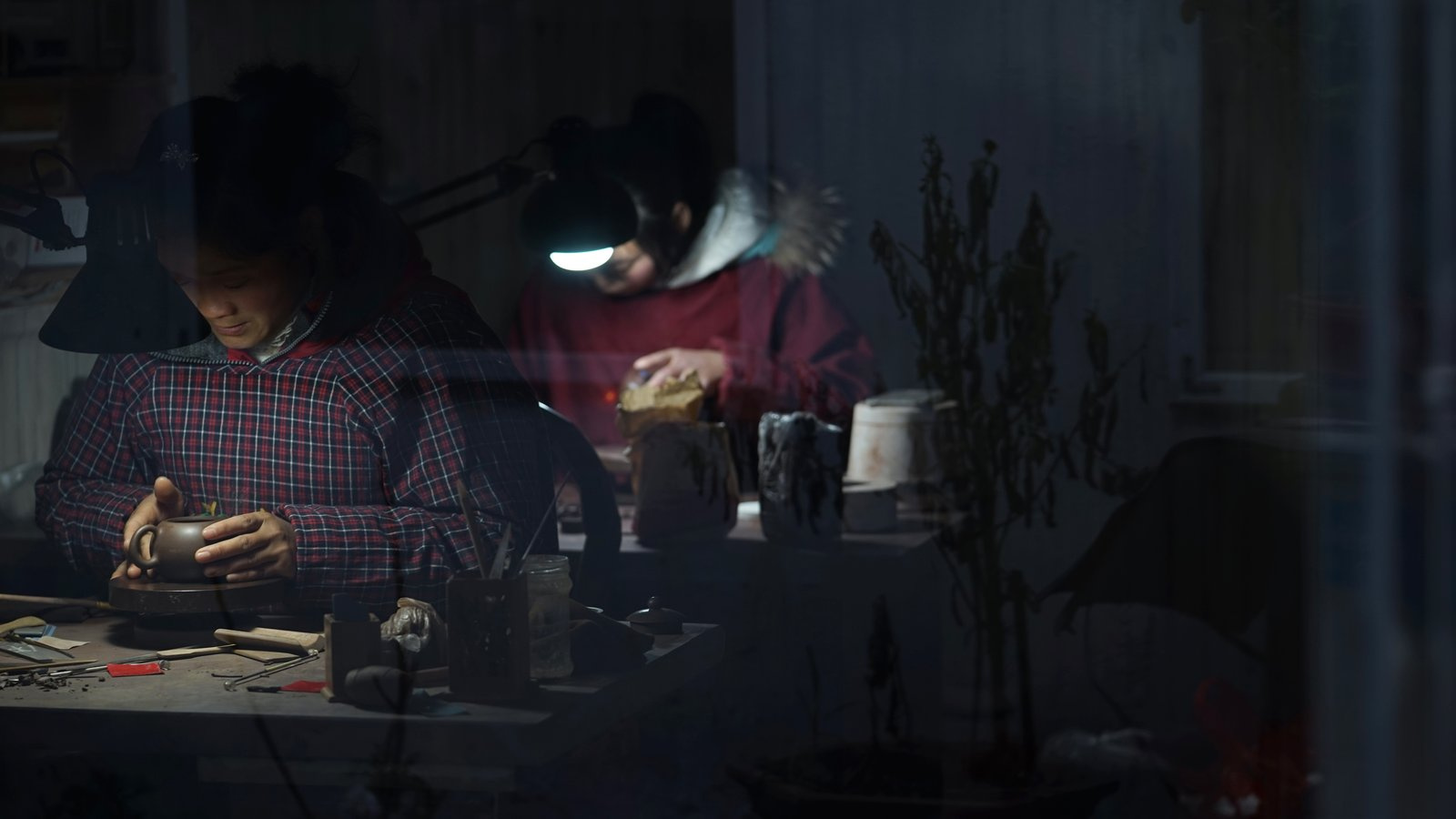
You can see how a teapot is actually made. Those TikTok videos with godlike clay-shaping technique are performative. The real thing isn’t like that. Someone sits on a low stool, a wooden mallet beating a clay slab into shape. Body, spout, opening, lid. The tools are cleverly designed, simple but functional. The pace is slow, the hands are fast. The maker rubs the clay between their fingers, judging the porosity, the moisture level. They calculate the tolerances each part needs, by feel, to achieve the perfect line they have in mind.
Once you’ve been here, “Yixing” stops being a magic word.
Also, getting here is easy. It’s about 200 km from Shanghai. If you’re passing through Shanghai, Nanjing, or Hangzhou, you can absolutely make a detour. And right now, China offers visa-free entry for 30 days to travelers from many countries.
How to get to Yixing and Dingshu
Take the high-speed train. In my experience, the best route is from Shanghai South Station. Trains run almost hourly, and it takes about 70 minutes to reach Yixing. From Yixing station, DiDi or bus will get you to Dingshu easily.
One day in Dingshu
If you only have one day, don’t try to see everything. This route is meant to help you build real understanding of Yixing’s ceramic culture.
Morning: Gunan Street and the Shushan trail (9:30 AM)
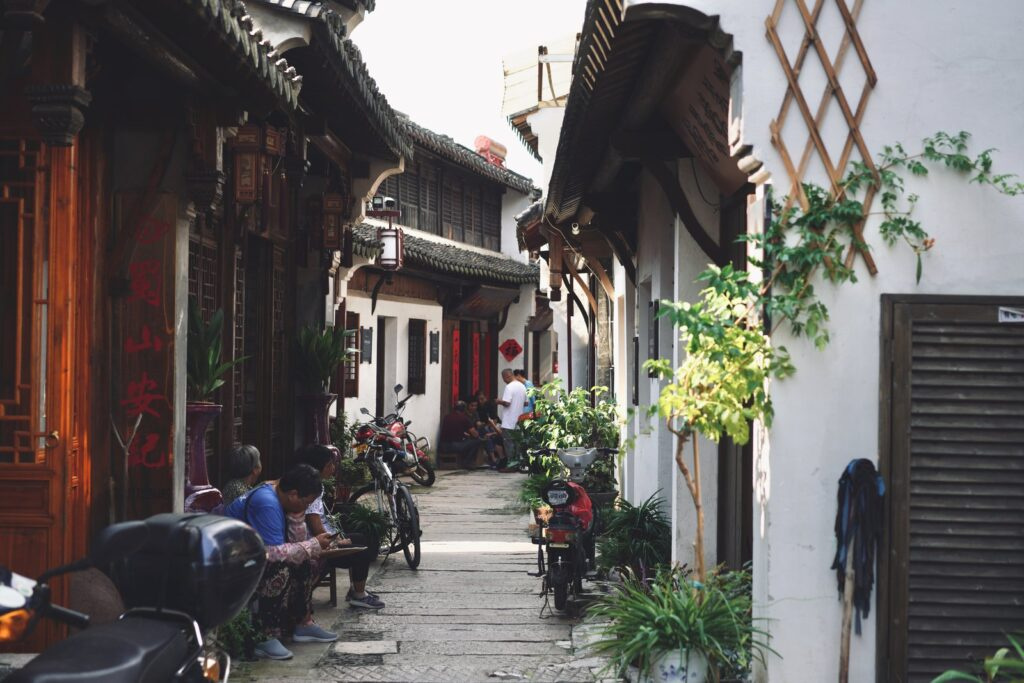
Gunan Street should be your first stop. It pulls you into Dingshu’s past. This isn’t a new street rebuilt for tourists. It’s a neighborhood that still carries the memory of an old industry. The street runs along the river, connected to Shushan, Li River, old residential areas, and the legacy of the teapot trade.
You can follow a thread: the former home of Gu Jingzhou (the most famous Yixing master, 顾景舟故居), the Deyilou Teahouse (where Gu Jingzhou first made his name, 得义楼茶馆), the old trade guild hall (同业公所), the street steles (街牌). None of these are visually dramatic. But together, they make you realize this was never a “tourist street”. It was where teapots were made, sold, and lived, a living ecosystem. Some workshops still operate in the old front-shop-back-workshop style.
There are still some real craftsmen on Gunan Street. But most of them are in an illegal line of work these days. They make replicas of Gu Jingzhou and other grand masters of the past, and I mean indistinguishable: the clay composition, the tool marks, the seal, the firing atmosphere, everything down to the last detail. Museum-quality fakes. Earlier this year, about 200 people involved in this kind of trade were arrested, mostly livestream sellers. (I heard one guy sold a “Gu Jingzhou” pot to a buyer in Beijing for 500,000 RMB.)
After the street, take the Shushan trail up the hill for a view of how the town sits against the landscape.
Lunch: eat local (11:30 AM)
Keep it simple, local, reliable. My go-to spots: Gufang Chashi (古方茶食, creative Chinese), Jiao Min Cai Fan (焦敏菜饭, salty pork mixed with rice), Jinyang Restaurant (金阳饭店, authentic 1980s flavors), Huashun Restaurant (华顺餐馆, alleyway stir-fry, cooked to order), Taihu Sightseeing Restaurant (太湖观光饭店, Taihu Lake “three whites”: white fish, white shrimp, silverfish). Pick based on your route and what’s open that day.
For a quick bite: Lao Zaotou Noodle House (老灶头面馆, big portions, no frills), Chenmeng Xiaolongbao (晨梦小笼包, the rare non-sweet soup dumpling), Xunwei Noodle House (浔味面馆, northern Zhejiang dry-tossed noodles).
These are all places I eat at regularly as a local.
Early afternoon: Qianshu dragon kiln and exhibition hall (12:30 PM)
This is one of the places in Dingshu most worth your time. The kiln was first fired in the Ming Dynasty and is still occasionally fired today, one of the few remaining dragon kilns in the Yixing area still using traditional firing methods. It’s called a “living artifact”.
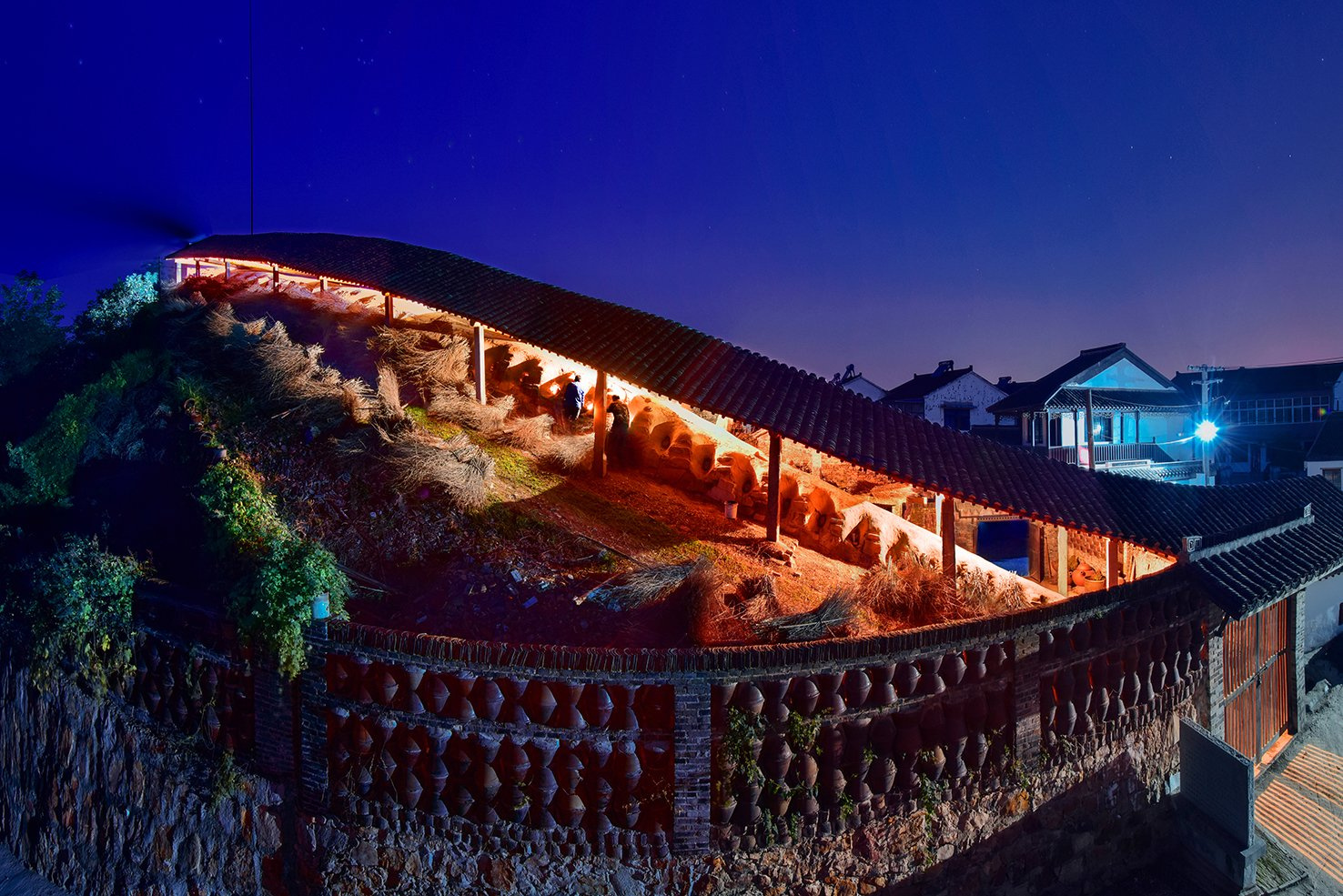
The exhibition hall next to the kiln is worth exploring. It covers the origins, techniques, distribution, and daily life of the kiln workers, essential context for understanding Dingshu’s ceramic tradition. The actual kiln site isn’t always accessible due to heritage protection rules, but if you’re really keen, reach out to me.
The best thing about Qianshu is that it hasn’t been over-touristed. The kiln is still fired four times a year, once per season. To protect itself, it must be fired from time to time. If a dragon kiln isn’t fired regularly, the kiln body absorbs moisture, gets heavier, and eventually collapses. But firing it is brutal work, and few young people want to learn or do it anymore. One of the old gents who loads the kiln told me each firing involves about 5,000 ceramic pieces passing through his hands. With the saggars, that’s roughly two tons of material.
Mid-afternoon: CCCA, UCCA Clay Museum, M Gallery (1:30 PM)
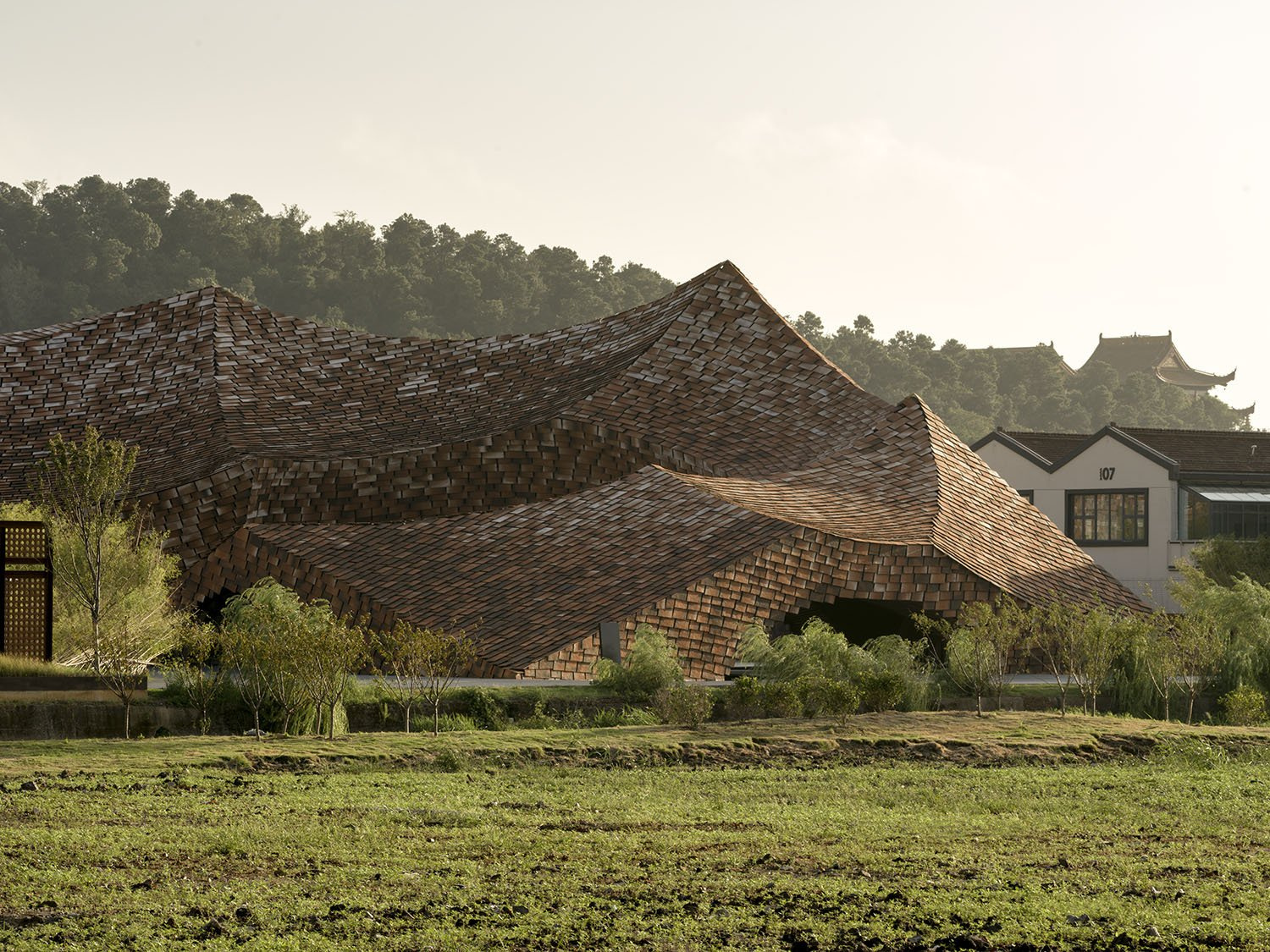
CCCA is a converted factory, formerly the Yixing Zisha No. 2 Factory, a township enterprise from the early 1980s, now reimagined as a cultural district. What’s worth seeing: the preserved old buildings in the east section, the UCCA Clay Museum designed by Kengo Kuma (contemporary ceramic art meets architecture), and M Gallery (a lively modernist ceramics gallery).
The CCCA Creative Bazaar is worth mentioning. It usually runs on weekends in the district. I personally launched it in November 2023, pulling in almost every connection I had: local innovative ceramic artists, potters from the Jingdezhen Pottery Workshop, students and faculty from China Academy of Art and Nanjing University of the Arts. The response from visitors was overwhelmingly positive. The vibe has shifted since, but it might still be the best handmade market around Yixing.
Late afternoon: Huanglong Hill mine park and exhibition hall (3:30 PM)
After CCCA, head to Huanglong Hill. This is where you physically encounter the clay.
The park was built on a decommissioned mine, about 23.5 hectares, with around 20 points of interest including the Taixi Well site and the mine exhibition hall. This is the famous Yixing clay source, what people call “Benshan” (the original hill).
This place solves one problem better than anywhere else: Yixing clay is not mysticism. It starts with geology, mineral deposits, materials. The southern trails, exposed mine layers, quarry pits, water features, and plants all fit together into one landscape. You don’t need to understand clay types in one visit. But you’ll at least learn that “zisha” isn’t some abstract phrase sellers throw around. It’s a physical material with specific geological and craft origins.
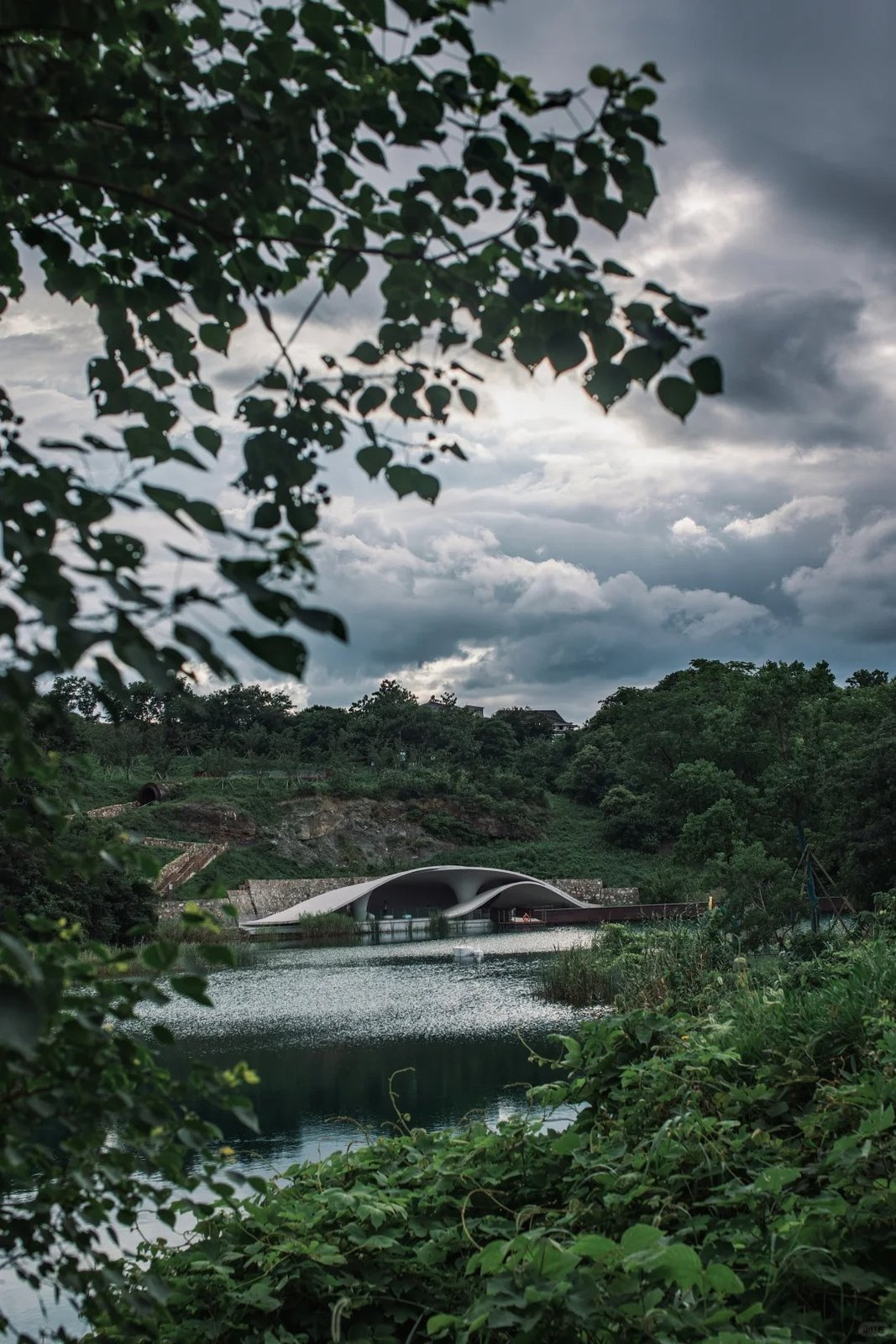
Huanglong Hill sits right in the middle of town. Mining stopped in 2005 for environmental reasons. After that, it became a kind of no-man’s-land. Some nearby shop owners dug tunnels to secretly extract clay. Others went straight up the mountain at night to mine. I have a friend named Old Liu, who looks exactly like Trevor Philips from GTA5. He got caught stealing clay during the first year of COVID. After that, he and his younger brother took turns going to prison, three months each, alternating. For a while, he just vanished and I had no idea what was going on.
The route at a glance
Morning: Gunan Street and the Shushan trail (9:30 AM)
Early afternoon: Qianshu dragon kiln and exhibition hall (12:30 PM)
Mid-afternoon: CCCA, UCCA Clay Museum, M Gallery (1:30 PM)
Late afternoon: Huanglong Hill mine park and exhibition hall (3:30 PM)
I’m not saying you must follow this exactly. But if you only have one day, this is the most logical arrangement I can think of.
Should you buy a Yixing on your first visit?
You don’t have to.
Dingshu is absolutely a place to buy pots. But on your first visit, buying shouldn’t be the only goal. Especially if you’re new to Yixing. If you arrive and immediately start asking about clay types, makers, fully-handmade status, titles, and prices, you’ll drown in these terms before you know it.
If you do want to take a look at teapots, save it for last:
- Jiangsu Yixing Zisha Craft Factory (Factory 1, 江苏省宜兴紫砂工艺厂): works for collectors and enthusiasts. Strong symbolic weight as the original “Factory 1”. Many former factory workers still make pots inside.
- Yinjia village (尹家村): more practical, commodity-oriented, wholesale logic. You might find a cheap, usable everyday pot here.
- China Ceramic Capital Market (陶瓷城): you can find all the different teapots in here, different shapes, price ranges, sizes. The only real advice: do not enter the shops on the main road. Those are for tourists.
- Taoli Cultural Square (陶里文化广场), Zisha Village (紫砂村), Taobo Commercial Street (陶博商业街), Hengtian Zijin City (紫金城): these can be supplementary stops.
Before you decide to buy, ask yourself 3 questions: Is this Yixing right for the tea I brew? (function). Do I genuinely like this one? (aesthetics). Am I paying for utility, craftsmanship, the maker’s name, or someone’s story? (value judgment and budget).
Also: the moment you feel something off, leave. If the shopkeeper is playing mysterious. Acting indifferent, “this isn’t for sale, that’s not for sale”. Hyping the clay’s scarcity, “Benshan ore”. Name-dropping masters to justify a price, “you’ve struck gold today”. Being vague about numbers, like they’re still deciding what to charge you. Any of this, just walk.
Quick answers for first-time visitors
How much does a Yixing teapot actually cost?
From a few dozen RMB for a basic half-handmade pot to hundreds of thousands for a famous master’s work. On your first visit, don’t shop by price. Look at the clay and the workmanship, then decide what the pot is worth to you.
Is it safe to buy a teapot in Dingshu, or will I get scammed?
Safe, if you don’t walk into the first shop you see. The main streets of the Ceramic Capital Market are for tourists. Ask around, visit a working studio, and trust your gut. If a seller plays mysterious about price or clay, walk away. That rule has never failed me.
Do I need to speak Chinese?
It helps, but you can manage without. Young people in Dingshu often know some English, DiDi has an English interface, and the Chinese place names in this post will get you where you need to go in Amap or Baidu Maps.
How long should I spend in Dingshu?
One day covers the main route in this post. Two days is more comfortable, especially if you want time in a studio. A week and you’ll start understanding why this town is the way it is. ##
Places mentioned (Chinese-English for navigation)
Below are the places I’ve mentioned with Chinese and English names. Once you’re in China, search the Chinese names in Amap or Baidu Maps. Google Maps positions can be inaccurate, so I’m putting together proper map pins. For now, the Chinese names below will get you there.
- Gunan Street / 古南街 (Old South Street)
- Qianshu Dragon Kiln / 前墅龙窑
- CCCA / 陶二厂 (Ceramic Culture and Creative Avenue)
- UCCA Clay Museum / UCCA 陶美术馆
- M Gallery / M画廊
- Huanglong Hill Mine Park / 黄龙山矿址公园
- Yixing Ceramic Museum / 中国宜兴陶瓷博物馆
- Yixing Zisha Craft Factory / 江苏省宜兴紫砂工艺厂 (Factory 1)
- China Ceramic Capital Market / 中国陶都陶瓷城
- Yinjia Village / 尹家村
There are more interesting spots in Dingshu, but I don’t want to make this post too long. I’ll find a way to give a full list later.
One last thing
Dingshu isn’t Shaolin, and it isn’t Disney Springs. But it is a rare place: you can still see craft, materials, kiln fire, old streets, factory regeneration, and ordinary people’s lives. You can walk from a historic street to a dragon kiln, from a mountain mine into a ceramic gallery, and then sit down at a dinner table or a tea table and reconsider why this way of life still exists in the modern days.
The most valuable thing you should do is visit a real craftsman’s studio. Not a shop, a working studio. Sit down with them at their tea table. The table is usually plain. The tea is cheap but refreshing, some Yixing red tea. Over a cup, you hear the real story of how a teapot goes from clay to forming to firing to use. For a first-time visitor to Dingshu, this is worth more than any teapot you could buy.
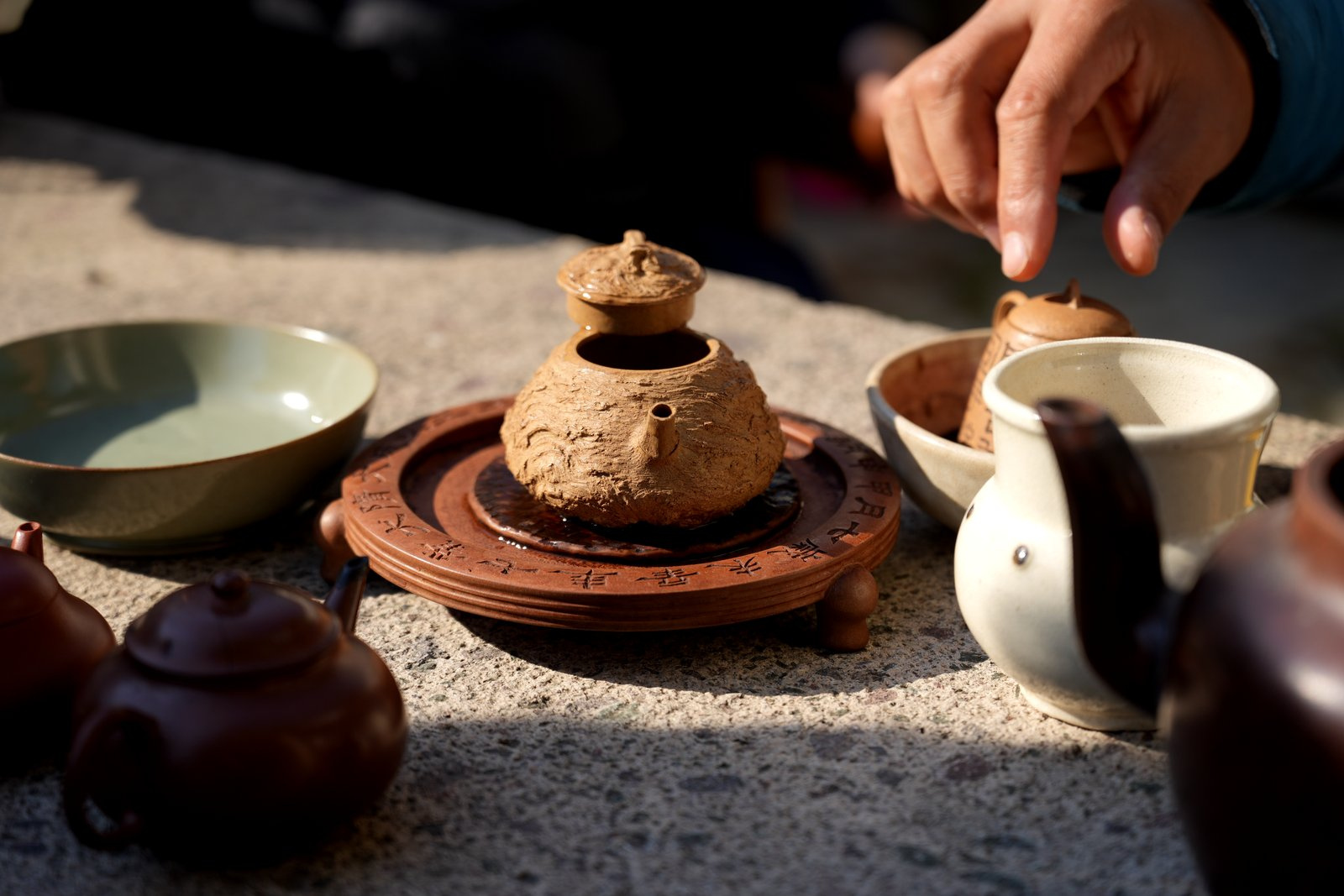
It’s a local’s perspective on where to go, what to pay attention to, and what’s actually worth your time. Ask me anything in the comments.
And of course, you’re welcome to come find me in Yixing for a cup of tea.
Visiting Dingshu: common questions
Where are Yixing teapots actually made?
Dingshu, the town this guide is about. It sits inside Yixing, Jiangsu, roughly two hours west of Shanghai by road. Almost every workshop, kiln, and old clay pit in the Yixing story is here, not in the Yixing city centre.
Can you buy a real Yixing teapot in Dingshu?
Yes, but the town has two separate worlds. The tourist streets sell souvenir pots by the box. Working studios sell one pot at a time, usually from the potter who made it. If you want the second kind, ask to visit a studio and sit down for tea first. You can also browse the handmade pots we ship from Dingshu.
How much should a handmade Yixing teapot cost?
Full handmade pots from a named local potter usually start around 1,000 RMB and go up with clay, size, and the maker. Anything under a few hundred RMB in a tourist shop is almost always slip cast, not full handmade. Our Shuiping teapot in Xiaomeiyao zhuni is one example of the real thing, with the clay and the price both listed.
How do you get to Dingshu from Shanghai?
Take the high speed train from Shanghai Hongqiao to Yixing station, about 1.5 to 2 hours. From Yixing station, Dingshu is a 20 to 30 minute taxi ride. Most visitors do it as a day trip, but one night in town is calmer and lets you catch an early kiln firing.