
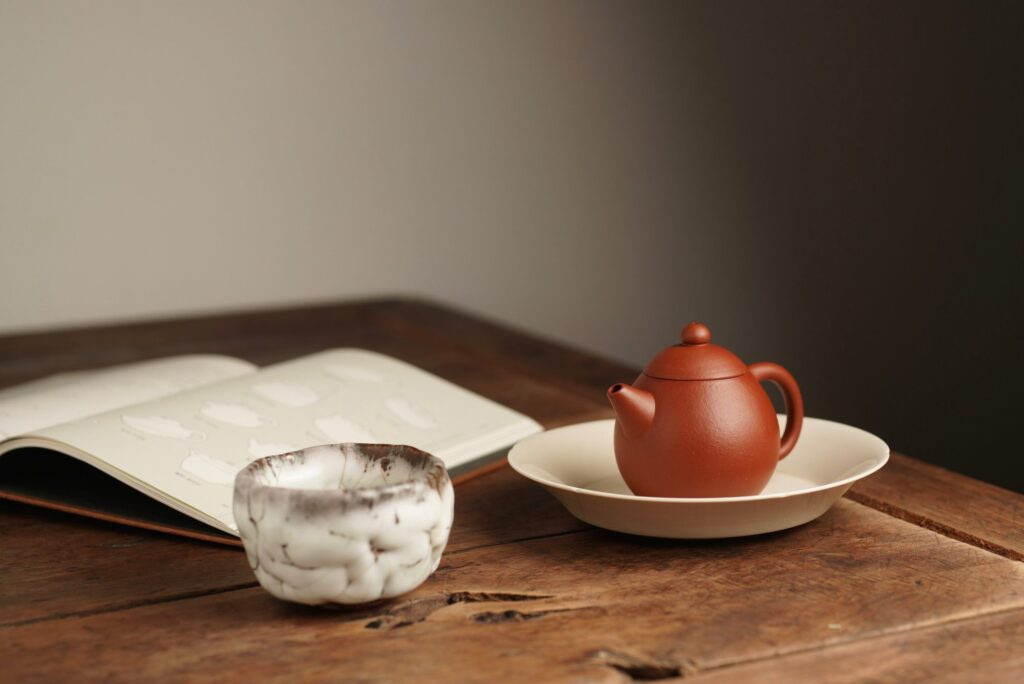
When you’re getting into Yixing teapots, the biggest headache is how to know if a teapot is good or worth the price. How do you tell?
So I asked myself: how do I tell a teapot’s quality? What kind of tools am I going to use when I take a glance at some random teapots? How do my brain and eyes work?
One word that pops into my mind is 工 (Gong). In Yixing, people also say 细工 (Xi Gong) or 细功夫 (Xi Gong Fu) to refer to this term. It shares the same meaning, or at least part of the meaning, of Kung Fu. It is so direct that you can observe it with your own eyes, and you don’t need any professional knowledge, clay study, or ceramic background. It is easy to use, and precise: you just look closely.
If the Gong is good, and you genuinely enjoy looking at the teapot, your chances of getting ripped off or scammed drop significantly. Why?
Think about it: if you already spend so much time crafting one single teapot, it just doesn’t make sense to use trash materials. When you make a teapot at a delightful and concentrated pace, most likely you will choose good clay instead of using some cheap kaolin mixed with Fe2O3 or BaCO3.
What Gong looks like: 4 things you can see from across the table
So, how do we judge Gong? I break it down into 4 direct and visible parts.
1. Mingzhen burnishing (明针 / 包明针)
Mingzhen is a tool made from a razor-thin slice of Chinese buffalo horn, and it also refers to the process of smoothing out the teapot’s surface before it goes into the kiln.
It’s just like when we are building a concrete floor, because we need to make the surface tight. During the process, the craftsman uses the tool to push on the surface of the teapot in order to make it smooth, and even perfect, with a unified texture.
An example of poor Mingzhen work. Look closely at the teapot’s shoulder. The texture on the shoulder is inconsistent, and the tightness of the clay is also inconsistent.
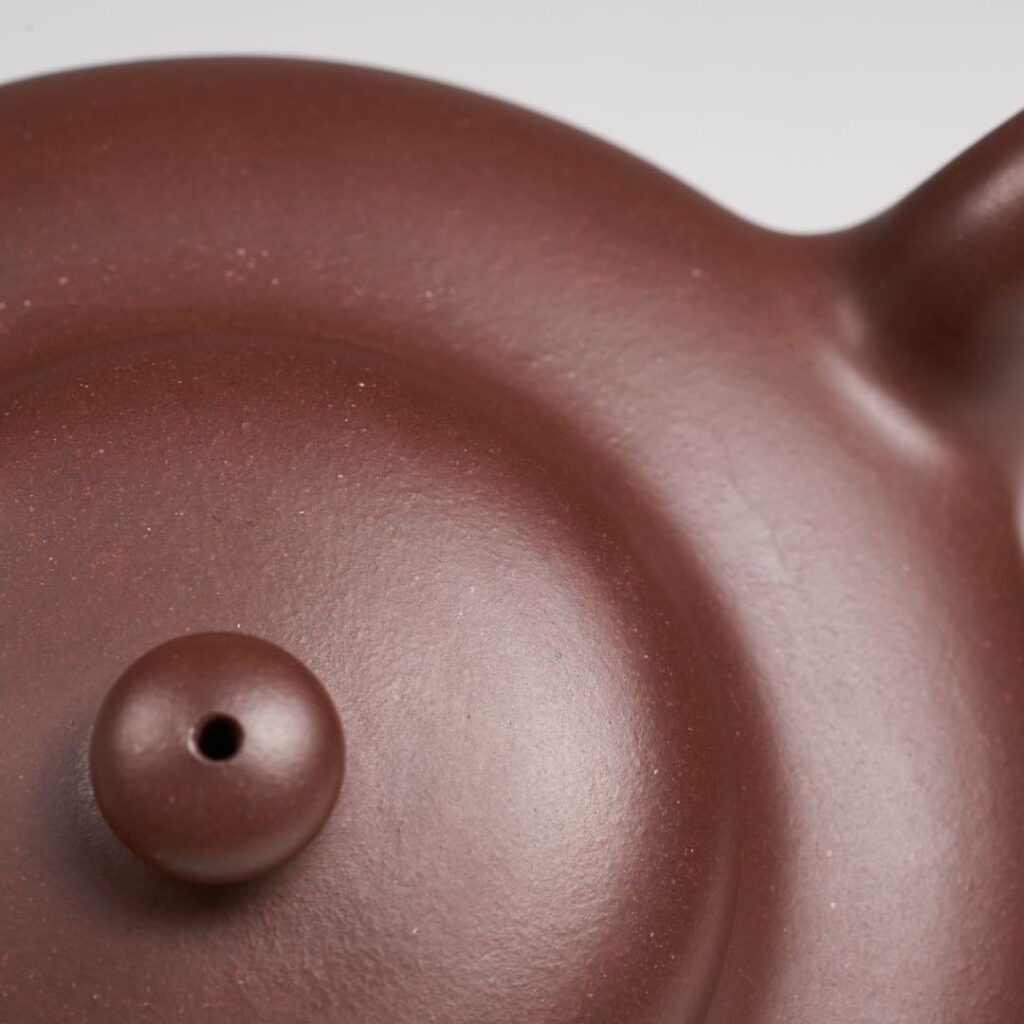
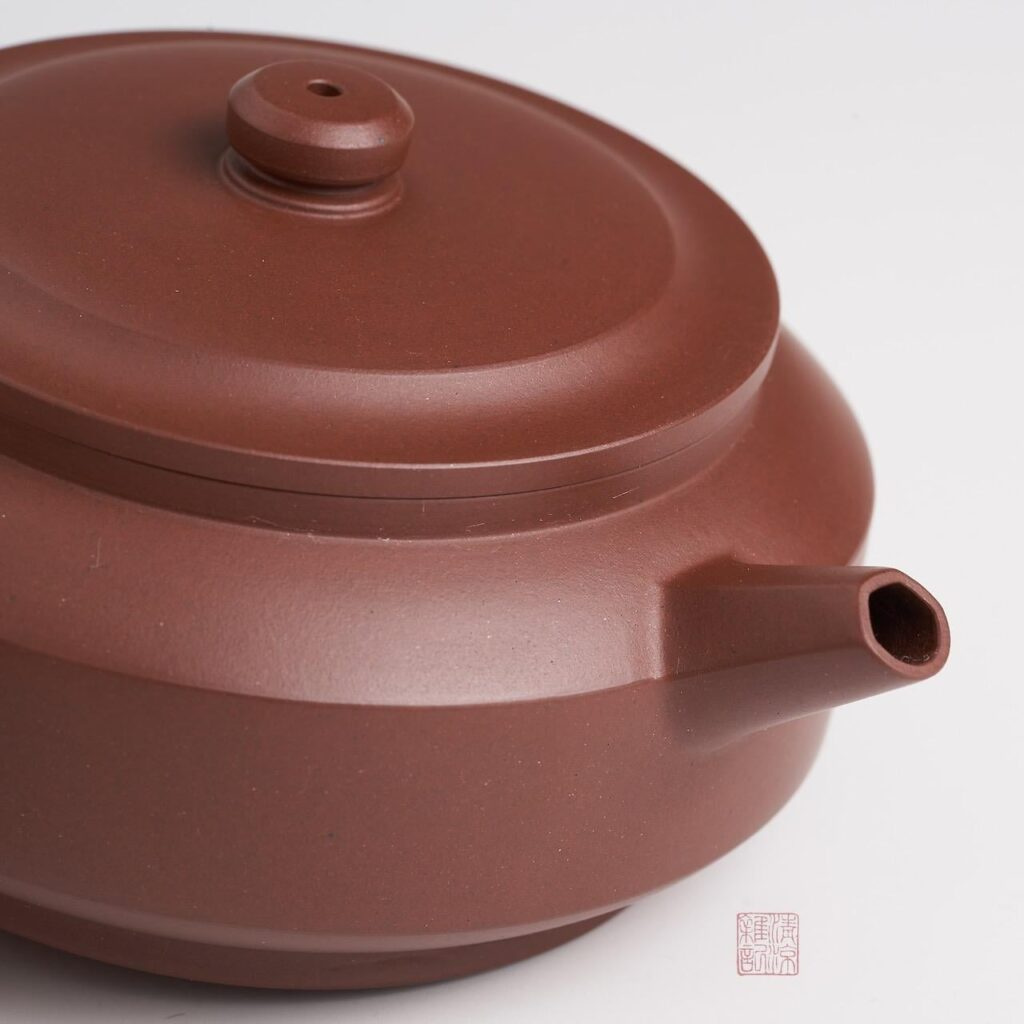
Now look at this excellent Mingzhen work. No matter if you look at the body surface, the shoulder, the lid surface, or the bridge knob, the texture is completely consistent. It gives you a highly comfortable feeling and a real jade-like texture.
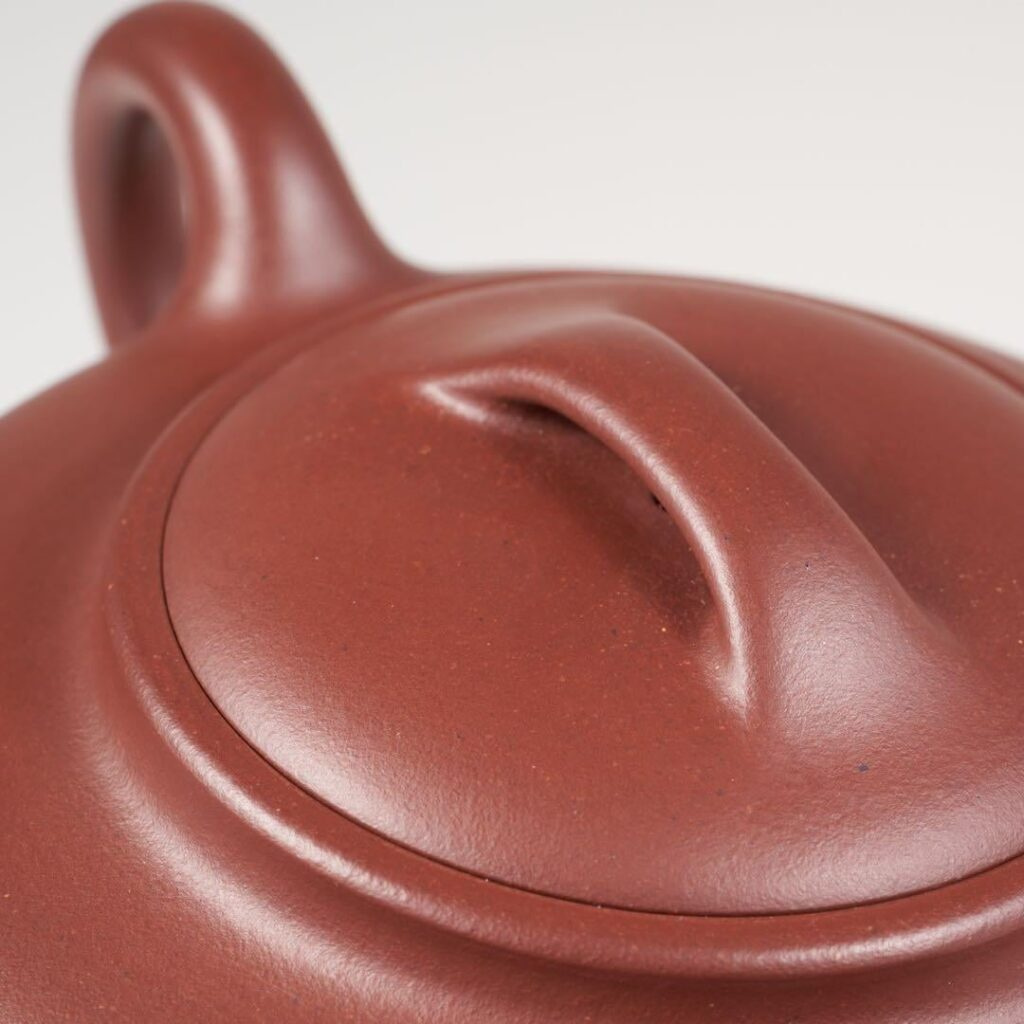
Here is another example of excellent Mingzhen work. The burnishing craft completely reflects the natural sandiness and tightness of the clay. It gives the pot a firm, physical beauty.
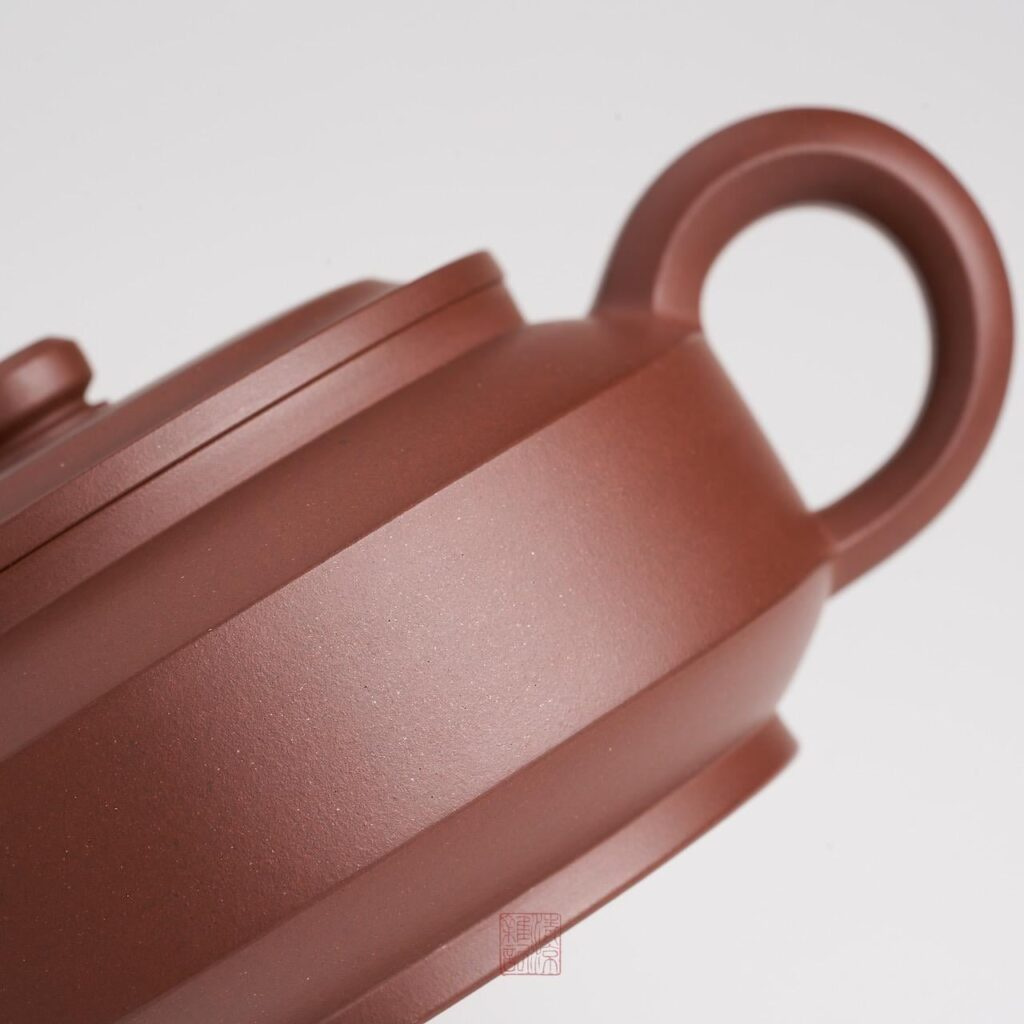
2. Lines shaping (线杠)
Aside from the flat surfaces, many teapot styles have lines on them. It might be the rim of the lid, or the opening of the body. We call this Li Xian Gang (理线杠), our local term for shaping the lines. Making them clean, neat, and sharp is a true sign of good Gong.
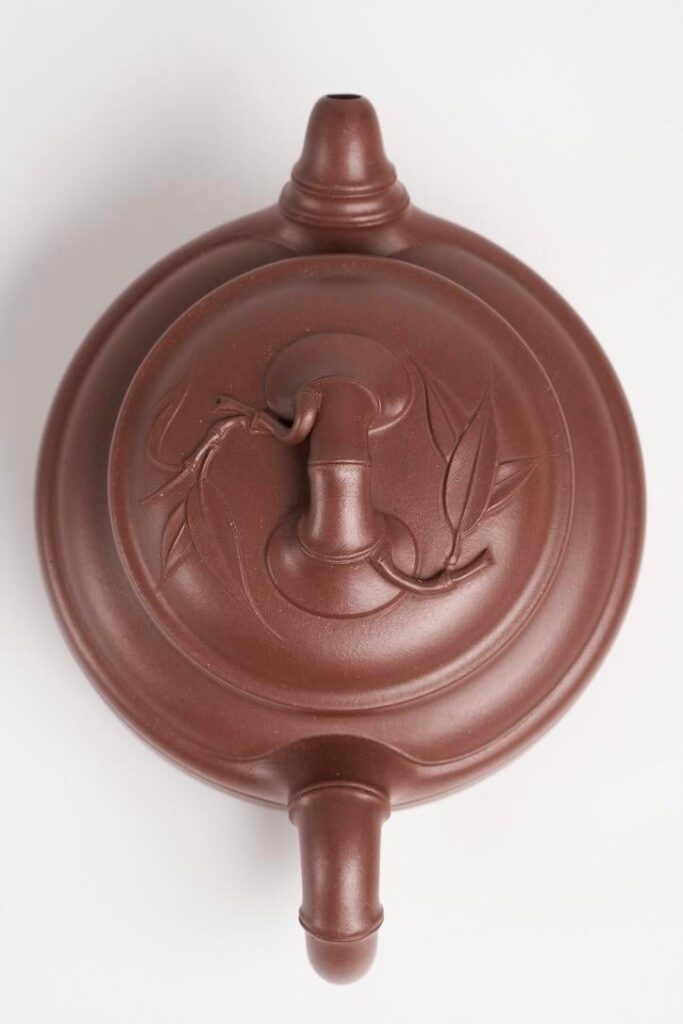
This is what crisp, clean, and even Xian Gang looks like. It is incredibly pleasant to the eye.
3. Attaching the spout and handle (掇嘴把)
Whether a teapot is slip-cast, half-handmade, or fully handmade, the spout and the handle must always be attached by human hands. This is often the most challenging part for a craftsman.
It requires an eye for balance, but more importantly, immense patience. The maker must blend the wet clay joints where the spout and handle meet the body. The joint should sit flat, or curve naturally into the body.
The legendary master Gu Jingzhou (顾景舟) once said: “The spout and the handle must be connected so seamlessly that they feel as if they organically grew right out of the teapot’s body.”
Look at the spout of this Minglu pot. It feels exactly like it grew right out of the teapot body.
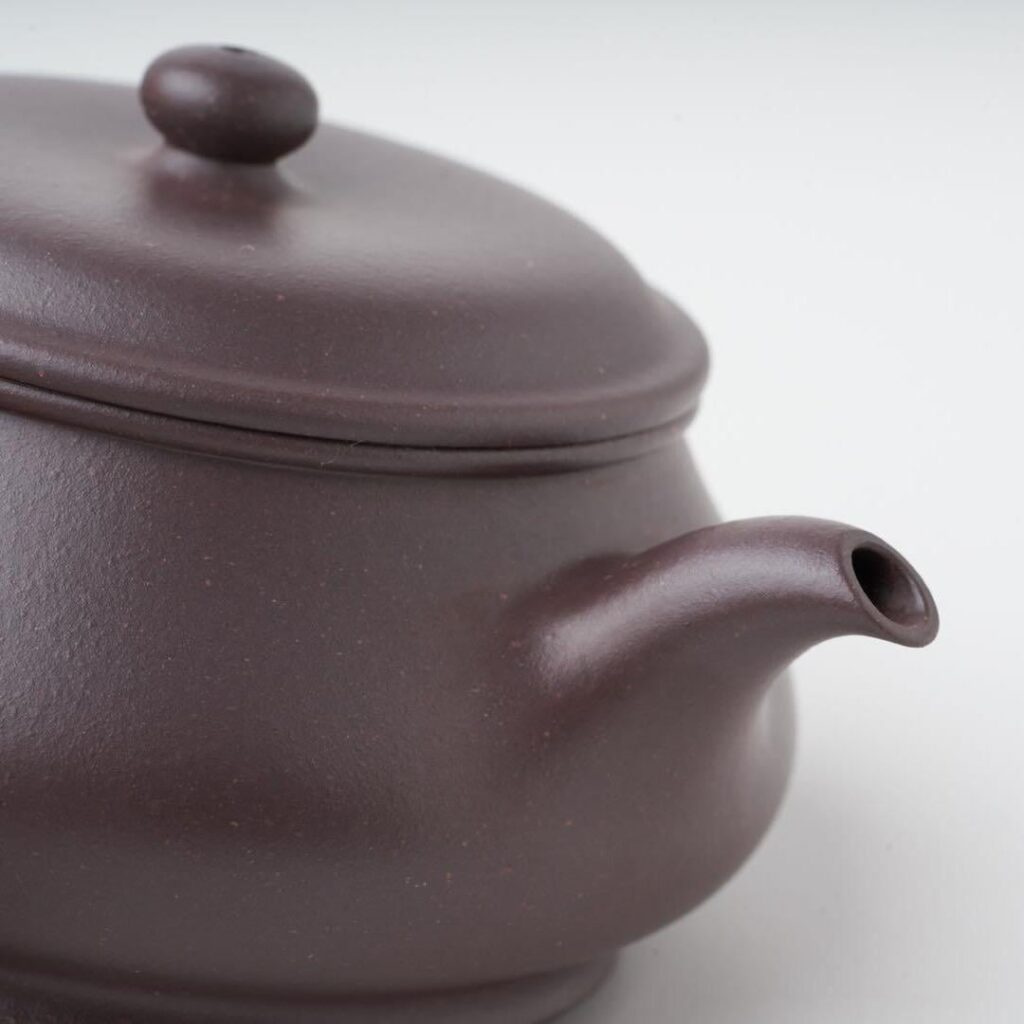
In contrast, this spout feels off. The reason might be that the angle of the spout, the curves shaped by the joining clay, and the surface smoothness were just not made well enough.
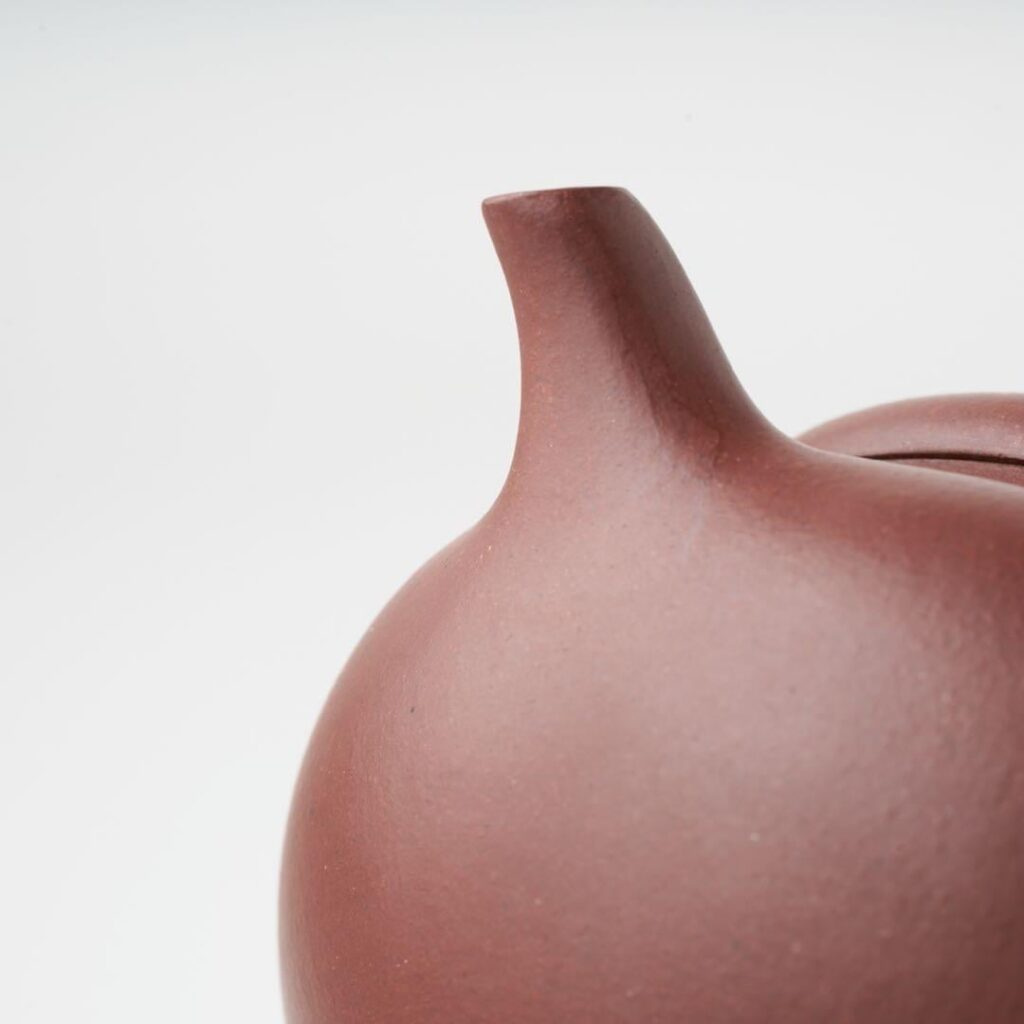
4. Hidden corners (拐弯抹角)
We always say “the devil is in the details.” But what does that mean for a teapot? We easily miss the details on our phones or clothes, not to mention on a teapot. But if they are lacking, the whole teapot just feels “off” or unfinished.
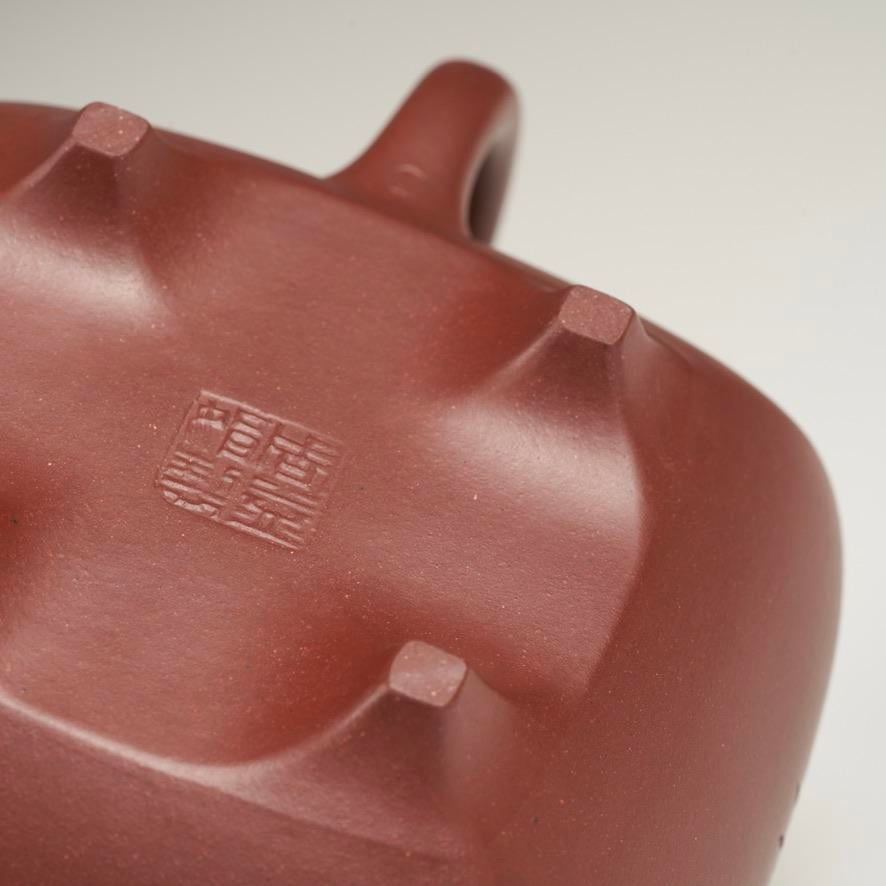
When people talk about Yixing details, they usually mean things like the curves on the bottom, the chamfered edges of the lid or the body opening, and so on.
Look at this slightly upturned lid edge. It feels a bit playful, and it also brings a bit of scholarly, elegant charm.
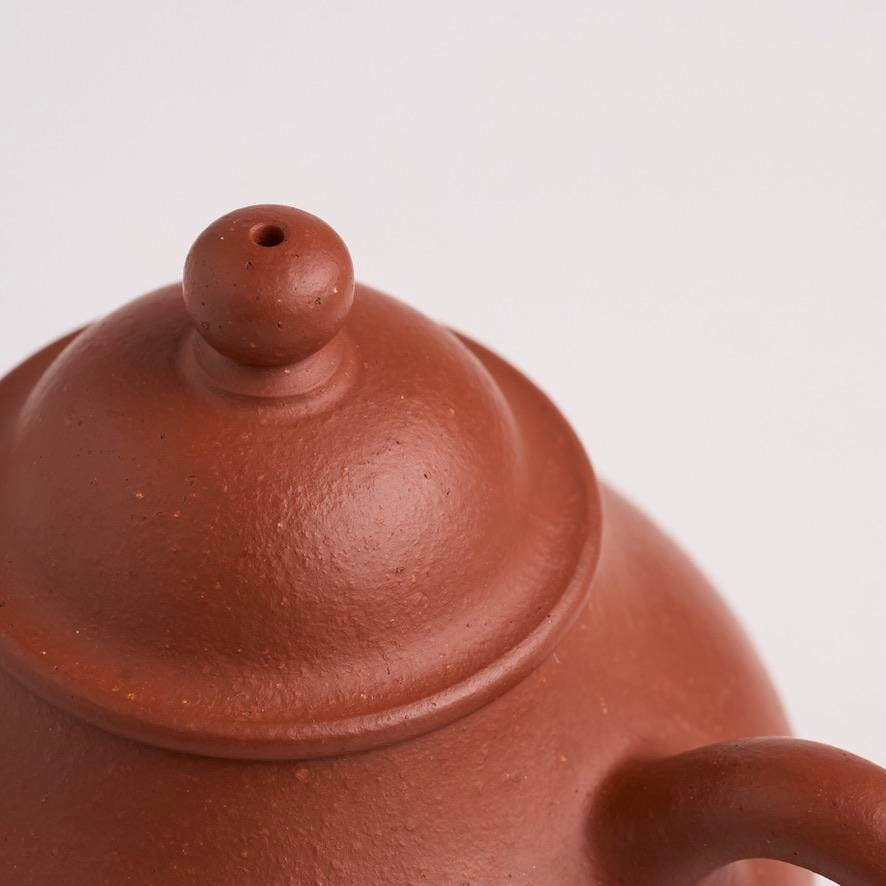
Notice how every single line and every single corner has a chamfer. In Chinese, we call this 拐弯抹角, literally: rounding every turn and corner.
This base feels solid and considered, almost architectural.
Some things also get called Gong, but they matter less
Beyond everything I mentioned above, people will also look closely at the fit of the lid and the perfect symmetry of the spout, handle, and body.
But I think those things are actually not that important. If we just want a perfect circle of a body or a straight line, for example the famous 3-points-on-a-line rule (三点一线), we could simply ask for a teapot made by a factory machine.
The idea is just like when we comment on ancient Chinese calligraphy. We don’t ask for perfect, identical characters, as if the calligraphy had been printed by a machine. We want to see, imagine, and feel the human touch.
A few things to keep in mind
Before we finish, there are 3 things I really want to point out so we are on the same page.
This only works on brand-new teapots. Please do not use this mindset to judge antique or vintage pots. Back in the day, during the historical development of Yixing teapots, makers didn’t really focus on these perfect Gong details. If you ever find a vintage pot with incredible Gong, that is a masterpiece among masterpieces. You almost never see them in the wild.
Special clays get a pass. For some rare or difficult clay types, like clays with massive shrinkage rates or super coarse sand particles, the requirements for Xi Gong are actually way more relaxed. This is exactly why masters usually prefer using standard, stable clays like Zini, Lvni, and some Tuanni (also spelled Duanni), while avoiding tricky ones like Zhuni.
Good Gong only means someone put a lot of time into one teapot. It does not mean this teapot is premium or highly appreciated by professionals or collectors. It all depends on how the elements work together on that specific piece.
That is how I read a teapot. Nothing on that list needs a certificate, a loupe, or a degree in ceramics. Just your eyes, and knowing where to point them.
Try it on the next teapot you look at.